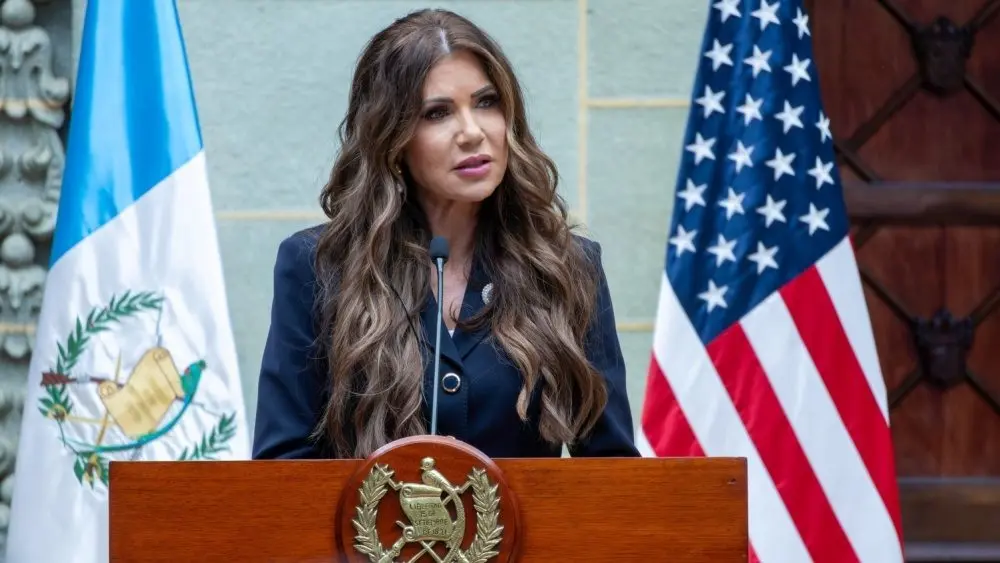


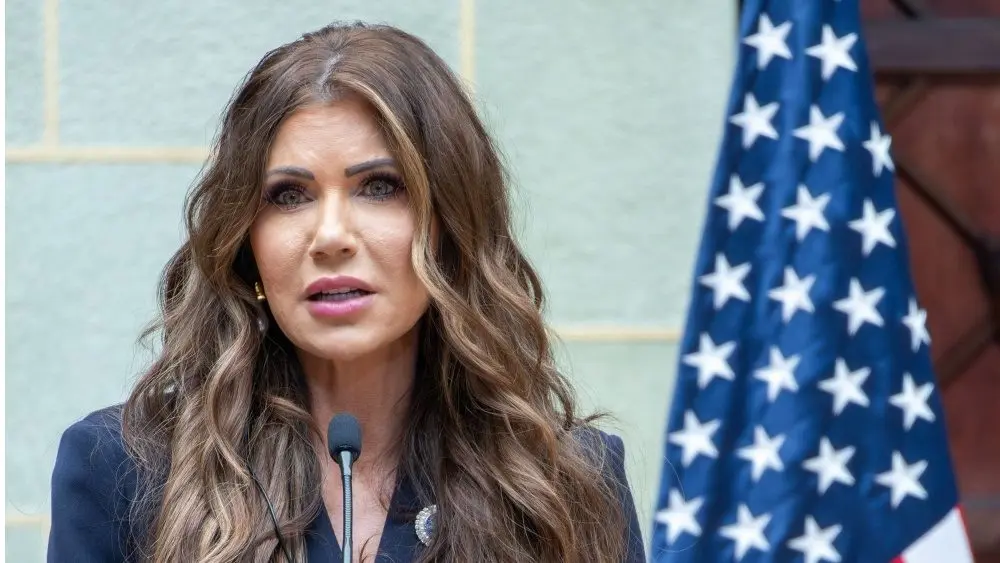
Homeland Security Secretary Kristi Noem said this weekend that investigators believe Rahmanullah Lakanwal — the Afghan national charged in last week’s ambush of two National Guard members near the White House in Washington, D.C. — was likely radicalized after he came to the United States. Lakanwal, 29, allegedly opened fire near the White House, killing one guard and critically wounding another; federal prosecutors have charged Lakanwal with first-degree murder. Noem made the claim during multiple interviews on Sunday, including NBC News’ “Meet the Press” as federal prosecutors moved forward with murder charges in the case.
Noem told interviewers she believes Lakanwal “was brought into the country by the Biden administration through Operation Allies Welcome. And then, maybe vetted after that, but not done well, based on what the guidelines were put forward by President Biden,” and added, “And now, since he’s been here, we believe he could have been radicalized in his home community and in his home state.” She repeatedly argued that the vetting framework used when he arrived required revision, and said pending cases would be reexamined under the current administration’s standards.
Lakanwal arrived in the U.S. in 2021 under Operation Allies Welcome and was granted asylum in April 2025; he previously worked with U.S. forces in an agency-backed Afghan partner forces — described in reporting as a “zero unit” — that worked alongside American troops in Kandahar before the U.S. withdrawal in 2021. Many members of those units were evacuated to the U.S. under Operation Allies Welcome and later faced legal, economic and mental-health challenges while resettling.
The Trump administration, which approved Lakanwal’s asylum application in April after earlier vetting steps, has responded to the attack by pausing asylum decisions and ordering expanded reviews of visa and green-card cases from countries it deems “of concern.” Noem and other officials have said they will reexamine pending cases under new screening standards and pursue removals where appropriate.
Those assertions about inadequate vetting have been disputed by former officials and independent analysts. ABC News and other outlets report that Afghans evacuated under Operation Allies Welcome underwent multiple checks — including biographic and biometric screening — at overseas processing sites and were subject to additional reviews once in the U.S. A senior official told ABC that the suspect “was clean on all checks” when reviewed by the National Counterterrorism Center at one point. Experts caution, too, that the vetting process is not predictive of future violent acts. “Let’s be clear on what the vetting system is and it isn’t,” one counterterrorism official noted.
Noem has said investigators are probing Lakanwal’s contacts and local ties to determine where possible radicalization occurred. “We do believe it was through connections in his home community and state, and we’re going to continue to talk to those who interacted with him,” she said.
Advocates for Afghan partners said sweeping measures risk harming people who worked with U.S. forces and who face legal uncertainty, joblessness and mental-health strains after evacuation. A representative for former Afghan “zero unit” members warned that treating these allies like “pariahs” will worsen an already fragile situation; one former commander wrote, “Without your help, we are trapped,” and cited suicides and despair within the community tied to delayed immigration assistance.
Editorial credit: Daniel Hernandez-Salazar / Shutterstock.com